

Welcome to Anabon Security. comprehensive trusted source of CCTV solutions
Smart Restroom Management System: Revolutionizing the Bathroom Experience
In today’s fast-paced world, where technology has transformed every aspect of our lives, it’s no surprise that even our restrooms are becoming smarter. The emergence of smart restroom management systems has revolutionized the way we experience public and private bathrooms. These innovative solutions leverage the power of IoT (Internet of Things) technology to enhance hygiene, efficiency, and user experience. In this comprehensive guide, we will explore the concept of smart restrooms, their features, and the benefits they offer.
Table of Contents
- What is a Smart Restroom?
- Smart Restroom Features
- How Do Smart Toilets Work?
- The Advantages of Smart Restroom Technology
- Implementing a Smart Restroom Solution
- Smart Restroom Management System: Streamlining Operations
- Smart Restroom Monitoring System: Ensuring Hygiene and Safety
- Case Study: Smart Train Restroom
- The Future of Smart Restroom Technology
- Conclusion
1. What is a Smart Restroom?
A smart restroom, also known as an intelligent restroom, is a technologically advanced facility that integrates various sensors, devices, and IoT technologies to enhance the overall restroom experience. These smart solutions are designed to address the challenges faced by traditional restrooms, such as cleanliness, efficiency, and user satisfaction.
By leveraging IoT technology, smart restrooms can collect and analyze real-time data on various aspects of restroom operations, including occupancy, cleanliness, supply levels, and maintenance requirements. This data-driven approach allows facility managers to make informed decisions, optimize resource allocation, and improve overall restroom management.
2. Smart Restroom Features
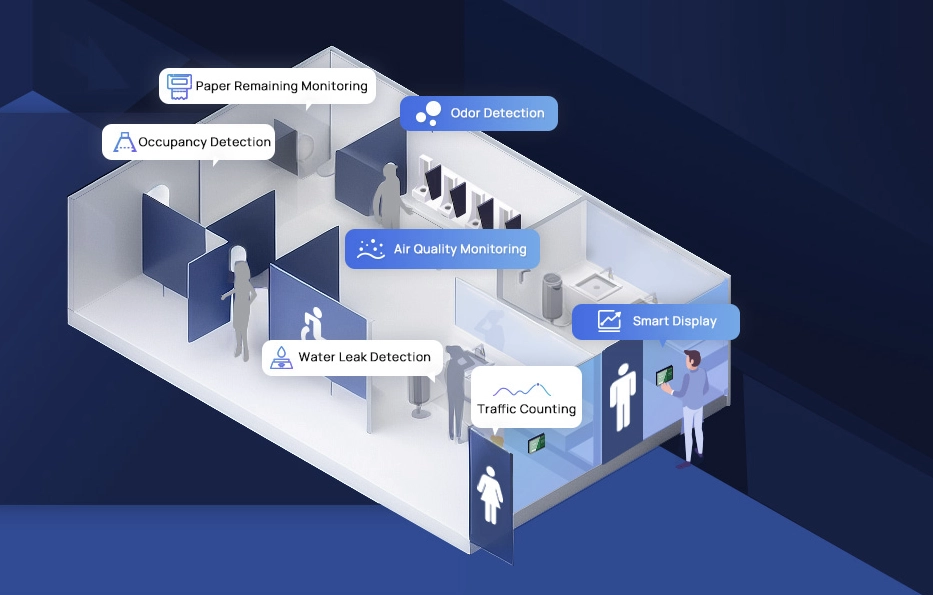
Smart restrooms come equipped with a wide range of features that enhance hygiene, convenience, and user experience. Let’s explore some of the key features that make these restrooms truly smart:
2.1 Occupancy Sensors
One of the fundamental features of a smart restroom is the presence of occupancy sensors. These sensors use advanced technologies like passive infrared (PIR) or time-of-flight (ToF) to accurately detect the number of users entering and exiting the restroom. This data helps facility managers monitor restroom traffic, optimize cleaning schedules, and ensure that there are enough resources available to meet user demands.
VS330 LoRaWAN® Bathroom Occupancy Sensor
- Dual Technology, Maximal Possibility
- Industry-leading Accuracy exceeding 99.5%
- Compliant with GDPR & 100% Anonymous Detection
- Real-time Update & Ultra-low Power Consumption
- Artful Design & Flexible Applications

2.2 Odor Detection
Nobody likes unpleasant odors in a restroom. Smart restrooms tackle this issue with the help of odor detection sensors. These sensors continuously monitor the air quality inside the restroom and can detect the presence of strong odors like ammonia or hydrogen sulfide. When the sensor detects an abnormal odor level, it triggers an alert, allowing facility managers to take immediate action and ensure a pleasant restroom environment for users.
LoRaWAN® Bathroom Odor Detector
- Detect NH3 & H2S with Higher Accuracy
- Wireless Deployment with up to 3 Years Battery Life
- Support LoRaWAN® & Milesight D2D Simultaneously
- Built-in Buzzer & Traffic Light Indicator for Alarming

2.3 Supply Level Monitoring
Running out of toilet paper or soap is a common frustration in traditional restrooms. Smart restrooms eliminate this problem by employing supply level monitoring sensors. These sensors keep track of the levels of essential restroom supplies, such as toilet paper, soap, and paper towels. When the supply levels reach a predefined threshold, the system sends an alert to the facility management team, prompting them to restock the supplies promptly.
WS201 Smart Fill Level Monitoring Sensor
- Suitable for Diverse Toilet Paper Dispenser
- Accurate Fill Level Monitoring with ToF Technology
- Up to 2 Years Battery Life with One Coin Cell Battery
- Wireless Deployment and Easy Maintenance

2.4 Real-time Feedback Systems
Smart restrooms often include real-time feedback systems that allow users to rate their restroom experience. These systems can be in the form of touchscreens or mobile applications. Users can provide feedback on cleanliness, odor, and overall satisfaction. This feedback helps facility managers identify areas for improvement and take immediate action to address any issues.
2.5 Energy Efficiency Measures
Smart restrooms are designed to be energy-efficient, helping to reduce both costs and environmental impact. These restrooms incorporate features such as motion-activated lighting and water-saving fixtures. Motion sensors detect user presence and turn on lights only when needed, reducing unnecessary energy consumption. Water-saving fixtures, such as low-flow toilets and faucets, help conserve water without compromising user experience.
3. How Do Smart Toilets Work?
Smart toilets, a key component of smart restrooms, have gained significant popularity in recent years. These technologically advanced toilets offer a range of features aimed at improving hygiene and user comfort. Let’s take a closer look at how smart toilets work:

3.1 Sensor-based Operation
Smart toilets utilize various sensors to provide a touchless, hygienic experience. These sensors can detect user presence, activate flushing mechanisms, and control features like bidets, air dryers, and seat warmers. By eliminating the need for physical contact, smart toilets minimize the spread of germs and enhance overall cleanliness.
3.2 Self-cleaning Capabilities
Keeping toilets clean is a tedious and time-consuming task. Smart toilets alleviate this burden with self-cleaning capabilities. These toilets are equipped with integrated cleaning systems that automatically clean the bowl, seat, and surrounding surfaces after each use. Some models even use UV light or disinfectant sprays to ensure optimal hygiene.
3.3 Personalized Settings
Smart toilets offer personalized settings that allow users to customize their experience. These settings can include adjustable water pressure and temperature, air dryer intensity, and even ambient lighting options. By tailoring the toilet experience to individual preferences, smart toilets enhance user comfort and satisfaction.
3.4 Remote Monitoring and Control
Smart toilets can be connected to a centralized management system, enabling remote monitoring and control. Facility managers can access real-time data on toilet usage, maintenance requirements, and supply levels. This remote monitoring helps optimize maintenance schedules, prevent breakdowns, and ensure a seamless restroom experience for users.
4. The Advantages of Smart Restroom Technology

Implementing a smart restroom management system offers a wide range of advantages for both facility managers and restroom users. Let’s explore some of the key benefits:
4.1 Enhanced Hygiene and Safety
Smart restrooms prioritize hygiene and safety by leveraging various technologies. Sensors and real-time monitoring systems detect and address issues promptly, ensuring a clean and sanitized environment. Touchless operation and self-cleaning capabilities minimize the spread of germs, improving overall restroom hygiene.
4.2 Improved User Experience
Smart restrooms provide a seamless and convenient experience for users. Occupancy sensors help manage restroom traffic, reducing wait times and improving overall efficiency. Real-time feedback systems allow users to express their satisfaction or report any issues, ensuring their needs are heard and addressed promptly.
4.3 Efficient Resource Management
Smart restrooms optimize resource allocation by providing real-time data on occupancy, supply levels, and maintenance requirements. This data-driven approach allows facility managers to allocate cleaning staff, restock supplies, and schedule maintenance activities more efficiently. By eliminating unnecessary tasks and streamlining operations, smart restrooms help reduce costs and improve overall resource management.
4.4 Sustainability and Environmental Impact
Smart restrooms contribute to sustainability efforts by incorporating energy-efficient fixtures and water-saving technologies. Motion-activated lighting reduces energy consumption, while low-flow toilets and faucets help conserve water. By reducing resource consumption and waste, smart restrooms promote environmental responsibility.
5. Implementing a Smart Restroom Solution
Implementing a smart restroom solution involves several key steps to ensure a seamless transition and optimal results. Let’s explore the process of implementing a smart restroom solution:
5.1 Assessing Needs and Objectives
The first step in implementing a smart restroom solution is to assess the specific needs and objectives of the facility. This involves identifying pain points, such as hygiene issues, maintenance challenges, or inefficient resource allocation. Understanding the goals and requirements will help in selecting the right combination of sensors, devices, and technologies to address these challenges effectively.
5.2 Designing the System Architecture
Once the needs and objectives are identified, the next step is to design the system architecture. This involves determining the placement of sensors, the integration of control systems, and the connectivity requirements. Collaborating with experienced smart restroom solution providers can help in designing a robust and scalable system architecture.
5.3 Selecting the Right Technologies
Choosing the right technologies is crucial for the success of a smart restroom solution. This includes selecting occupancy sensors, supply level monitoring systems, odor detection sensors, and other relevant devices. It is important to ensure compatibility and seamless integration between different technologies to create a cohesive and effective smart restroom ecosystem.
5.4 Installation and Integration
Once the technologies are selected, the next step is the installation and integration process. This involves mounting sensors, configuring control systems, and connecting the smart restroom solution to a centralized management platform. It is essential to follow installation guidelines provided by the solution provider to ensure optimal performance and functionality.
5.5 Training and Maintenance
Training staff members on how to utilize and manage the smart restroom solution is crucial for long-term success. Facility managers should provide comprehensive training to ensure proper utilization of the system and to maximize its benefits. Additionally, regular maintenance and software updates are essential to keep the system running smoothly and address any potential issues.

A key component of a smart restroom solution is the smart restroom management system. This centralized platform collects and analyzes data from various sensors and devices, providing facility managers with valuable insights and control over restroom operations. Let’s explore the features and benefits of a smart restroom management system:
6.1 Real-time Data Monitoring
A smart restroom management system allows facility managers to monitor real-time data on various restroom parameters, including occupancy, supply levels, and maintenance requirements. This real-time monitoring enables proactive decision-making and efficient resource allocation.
6.2 Automated Alerts and Notifications
Smart restroom management systems can be configured to send automated alerts and notifications to the facility management team. These alerts can be triggered by events such as low supply levels, high odor concentrations, or equipment malfunctions. By receiving timely alerts, facility managers can take immediate action and address issues before they escalate.
6.3 Data Analytics and Reporting
Data analytics and reporting capabilities are integral to a smart restroom management system. These features allow facility managers to gain valuable insights into restroom usage patterns, supply consumption trends, and maintenance requirements. By analyzing this data, facility managers can make data-driven decisions to optimize operations and improve overall restroom management.
6.4 Remote Control and Configuration
A smart restroom management system enables remote control and configuration of restroom devices and systems. Facility managers can remotely adjust settings, monitor performance, and configure parameters without the need for physical access to each restroom. This remote control capability streamlines operations and reduces the need for on-site maintenance.
6.5 Integration with Other Systems
Smart restroom management systems can be integrated with other building management systems, such as HVAC (Heating, Ventilation, and Air Conditioning) or access control systems. This integration enables a comprehensive view of the overall facility’s operations and allows for centralized control and management.
7. Smart Restroom Monitoring System: Ensuring Hygiene and Safety
A vital aspect of a smart restroom solution is the smart restroom monitoring system. This system utilizes advanced sensors and technologies to ensure optimal hygiene and safety in restrooms. Let’s explore the key features and benefits of a smart restroom monitoring system:
7.1 Occupancy Sensors
Occupancy sensors play a crucial role in a smart restroom monitoring system. These sensors accurately detect the number of users entering and exiting restrooms, providing real-time data on occupancy levels. By monitoring restroom traffic, facility managers can optimize cleaning schedules, ensure a smooth flow of users, and maintain social distancing protocols.
7.2 Odor Detection Sensors
Odor detection sensors are essential for maintaining a pleasant restroom environment. These sensors continuously monitor air quality and detect any abnormal odor concentrations. When an odor exceeds a predefined threshold, the system triggers an alert, allowing facility managers to take immediate action and ensure timely cleaning and ventilation.
7.3 Supply Level Monitoring Sensors
Supply level monitoring sensors are critical for preventing stockouts of essential restroom supplies. These sensors track the levels of items like toilet paper, soap, and paper towels. When supply levels reach a predefined threshold, the system sends an alert, enabling facility managers to restock supplies promptly and avoid inconvenience for users.
7.4 Real-time Surveillance Cameras
Real-time surveillance cameras provide an additional layer of security and monitoring in smart restrooms. These cameras can detect suspicious activities, monitor queue lengths, and assist in crowd management. By integrating surveillance cameras with the smart restroom monitoring system, facility managers can ensure a safe and secure environment for restroom users.
7.5 Analytics and Insights
A smart restroom monitoring system collects and analyzes data from various sensors and devices. This data can be used to generate actionable insights and reports, allowing facility managers to identify usage patterns, detect anomalies, and optimize resource allocation. With these analytics and insights, facility managers can continuously improve restroom operations and enhance user experience.
8. Case Study: Smart Train Restroom
Smart train restrooms are a prime example of how smart restroom solutions can revolutionize public restroom experiences. These restrooms are equipped with advanced technology to ensure cleanliness, efficiency, and user satisfaction. Let’s explore the features and benefits of smart train restrooms:
8.1 Occupancy Management
Smart train restrooms utilize occupancy sensors to manage restroom traffic effectively. These sensors provide real-time data on occupancy levels, allowing train staff to monitor restroom usage and ensure a smooth flow of passengers. By optimizing restroom usage, train operators can enhance passenger experience and reduce waiting times.
8.2 Intelligent Cleaning
Smart train restrooms employ smart cleaning algorithms to optimize restroom cleaning schedules. By analyzing occupancy patterns and usage data, the system can determine the optimal time for cleaning and restocking supplies. This intelligent cleaning approach ensures that train restrooms are clean, well-maintained, and always ready for passenger use.
8.3 Real-time Feedback and Reporting
Smart train restrooms often incorporate real-time feedback systems, allowing passengers to rate their restroom experience. This feedback helps train operators identify areas for improvement and address any issues promptly. Additionally, real-time reporting provides train staff with valuable insights into restroom usage, supply levels, and maintenance requirements.
8.4 Remote Monitoring and Control
Remote monitoring and control capabilities are essential for smart train restrooms. Train operators can access real-time data, remotely adjust settings, and monitor restroom operations from a centralized platform. This remote control capability enables proactive maintenance, optimized resource allocation, and improved overall restroom management.
9. The Future of Smart Restroom Technology
The future of smart restroom technology looks promising, with continuous advancements and innovations on the horizon. Here are some key trends that are shaping the future of smart restrooms:
9.1 AI-powered Systems
Artificial Intelligence (AI) is expected to play a significant role in the evolution of smart restrooms. AI algorithms can analyze complex data patterns, predict usage trends, and optimize resource allocation. AI-powered systems can also enhance user experience by personalizing settings based on individual preferences.
9.2 Voice-activated Controls
Voice-activated controls are gaining popularity in smart restrooms, offering a hands-free and intuitive user experience. Users can control various restroom features and settings by simply using voice commands. This technology not only improves convenience but also promotes hygiene by eliminating the need for physical touch.
9.3 Blockchain-based Solutions
Blockchain technology has the potential to revolutionize restroom management by providing secure and transparent data storage and sharing. Blockchain-based solutions can ensure data integrity, prevent tampering or manipulation, and facilitate efficient communication between different stakeholders involved in restroom management.
9.4 Integration with Smart Buildings
Smart restrooms are increasingly being integrated into larger smart building ecosystems. This integration allows for seamless communication and coordination between different building management systems, such as lighting, HVAC, and access control. By leveraging the power of interconnected systems, smart buildings can optimize resource utilization and provide a holistic user experience.
10. Conclusion
Smart restroom technology is transforming the way we experience public and private restrooms. With features like occupancy sensors, odor detection, and supply level monitoring, smart restrooms enhance hygiene, efficiency, and user satisfaction. The implementation of smart restroom management systems and monitoring systems streamlines operations, optimizes resource allocation, and ensures a safe and pleasant restroom experience.
As technology continues to evolve, the future of smart restrooms looks promising, with AI-powered systems, voice-activated controls, and blockchain-based solutions on the horizon. By embracing these advancements, facilities can create smart restrooms that meet the ever-changing needs and expectations of users.
Investing in smart restroom solutions is not only a step towards operational excellence but also a testament to a commitment to hygiene, sustainability, and user satisfaction. With the continuous development of innovative technologies, smart restrooms are set to revolutionize the way we think about and experience public and private restrooms.